
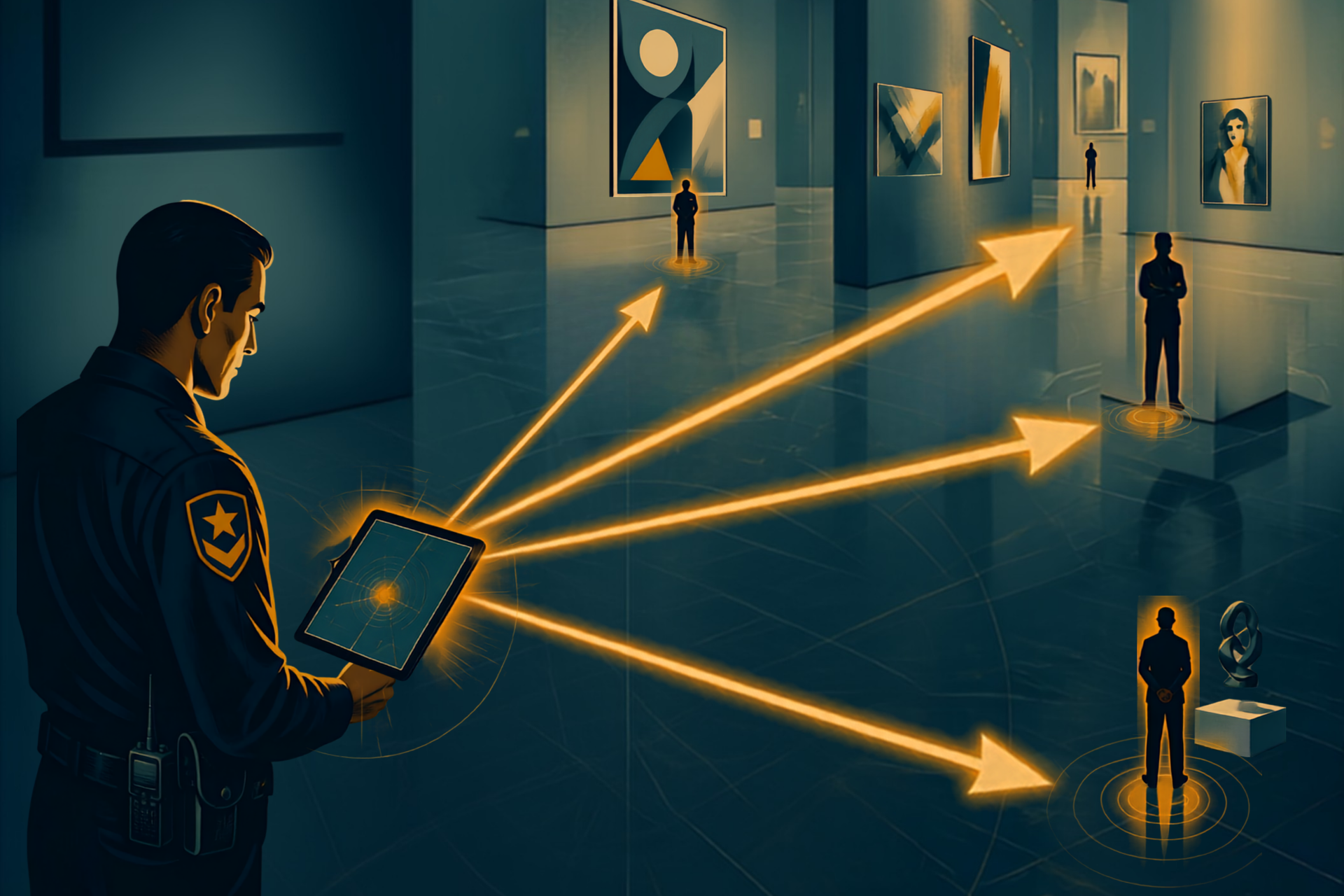
What happens when museum security technology becomes more than a way to monitor galleries?
That question was at the center of the recent Texas Association of Museums (TAM) webinar, “Transforming Security to Improve Collection Care and the Visitor Experience,” featuring Ken Bennett, Chief Security and Operations Officer at the Dallas Museum of Art, and Carrie Heflin of Art Sentry.
During the webinar, Bennett shared an inside look at the Dallas Museum of Art’s multi-year implementation of Art Sentry, from the project’s beginnings and installation process to the unexpected ways the technology is now supporting teams across the museum.
One message came through clearly: the value of the system goes far beyond adding another set of eyes to the gallery.
At the DMA, the technology is helping the museum protect more of its collection, create more objective visitor interactions, identify previously unseen touches, support conservation, inform exhibition decisions, reduce conflict, and give gallery attendants more opportunities to educate and engage visitors.
Protecting More Than Guards Alone Can Cover
The scale of the DMA’s collection protection challenge is significant. Bennett explained that once the expansion of the Art Sentry system is complete, it will cover roughly 1,300 permanent collection objects, in addition to approximately 100–150 objects in special exhibition galleries, depending on the exhibition and layout.
Achieving comparable coverage exclusively by adding gallery attendants would require a dramatically larger staff.
As Bennett explained:
“You’d probably need 30, 35, 40 gallery attendants to cover that same amount of space. And as much as I’d like to employ that many people, the reality is that the budgets won’t withstand it.”
For the DMA, technology offers a way to provide a broader level of protection within the museum’s available resources. But Bennett’s larger point was not that technology simply replaces the need for people.
It is that technology can provide capabilities that additional guards alone cannot.
From Subjective Enforcement to Objective Information
One of the DMA’s goals for the project was to reduce the subjectivity that can accompany traditional gallery enforcement. When a gallery attendant sees a visitor get too close to or touch an object, the interaction can quickly become one person’s word against another’s. Bennett described situations in which visitors may feel they are being singled out or unfairly targeted.
Video provides an objective record of what actually occurred. As Bennett explained:
“They’re not accusing somebody of something. They’re simply addressing something that has already objectively occurred.”
That changes the nature of the interaction. Instead of a staff member simply saying, I saw you do that, the conversation can become an opportunity to explain why the boundary exists and how the museum is working to protect its collection.
Bennett described the museum’s previous approach in some situations as “drive-by enforcement”—a gallery attendant sees something happen, tells the visitor to step back and then walks away. With better information and automated alerts supporting them, gallery attendants have an opportunity to shift toward more educational interactions. They can explain why an alarm occurred, what the museum is trying to protect, and how visitors can safely experience the collection.
Seeing What Human Observation Was Missing
One of the most eye-opening discoveries came when the DMA began comparing incidents detected by the system with those being reported by gallery attendants. Bennett said the museum saw a significant increase in documented touches, explaining during the webinar that for every touch a gallery attendant reported, the system detected six or seven. It revealed a gap that would be extremely difficult to solve simply by asking staff to watch more closely. As Bennett put it: “We just didn’t know how much we were missing until we started down this road.” Knowing what is happening creates opportunities to do something about it.
Turning Security Information Into Collection Care
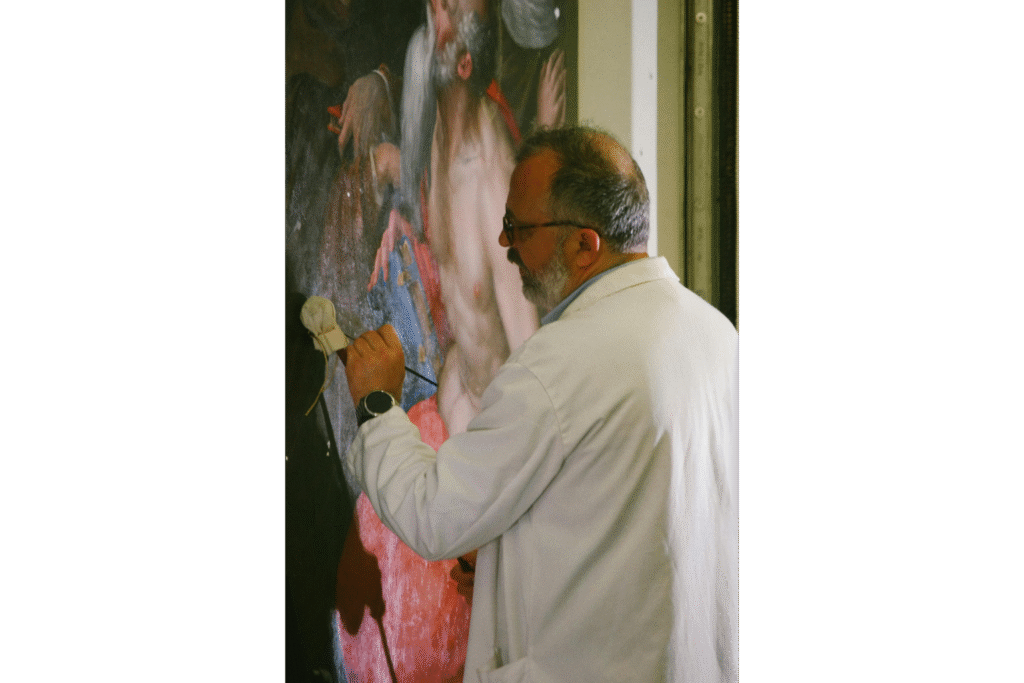
One of the most important examples Bennett shared involved conservation. When a touch is detected, the DMA can send video of the incident to the appropriate museum teams. That gives conservation staff the information they need to evaluate an object and determine whether any action is necessary. Without that information, Bennett noted, a touch could potentially go unnoticed for months. A gallery attendant completing an art check may or may not recognize that something has changed, particularly in a position where staff turnover can be relatively high. With video, conservation teams have a much clearer starting point. That creates a direct connection between security technology and preventive conservation and collection care—a benefit that extends well beyond traditional gallery monitoring.
Using Visitor Behavior to Inform Exhibition Decisions
The data can also help the museum understand when the way an exhibition is designed may be contributing to visitor behavior.
Bennett gave the example of placing two objects close together. If visitors are expected to remain two feet away from each object but the pathway between the works doesn’t provide enough clearance, proximity alarms can reveal the conflict.
Sometimes, as Bennett acknowledged, “we do that to ourselves.”
That doesn’t mean security data determines how an exhibition should be designed. Instead, it gives curatorial and collections teams another piece of objective information they can use when making decisions.
The museum may ultimately decide to keep the layout exactly as it is—but the decision can now be made with a better understanding of how visitors are actually moving through and interacting with the space.
For Bennett, making this information available beyond the security department was an important part of the project.
“If it could inform exhibition design and construction and placement to some degree, it could be helpful. If it could inform training and interaction with visitors, it could be very helpful.”
That philosophy has helped turn what could have remained a security tool into information that can support multiple museum departments.
Helping Staff Spend Less Time on Conflict
Technology also changes what gallery attendants are being asked to do.
Rather than expecting staff members to continuously watch every visitor and object, automated protection provides another layer of support. When an incident does require staff intervention, they can approach the interaction with more information and greater confidence about what occurred.
For Bennett, reducing unnecessary confrontation is an important outcome.
“Anytime you can reduce conflict without compromising your mission, that’s a good day.”
That doesn’t remove people from the collection protection equation. Instead, it can allow employees to spend more of their time on the parts of their jobs that require a human connection—communicating, educating and engaging with visitors.
Looking Beyond Object Protection
The webinar also explored how the DMA is beginning to think beyond traditional object protection.
Bennett discussed using customizable camera zones for general alarm applications in areas where traditional alarm technology can be difficult to deploy. Instead of control room staff simply receiving an alert that something happened, the system can provide video showing what happened.
He also noted that some museums are using Art Sentry as a video management system in addition to object protection, extending the technology into applications such as general surveillance and intrusion alarms.
For Bennett, that’s part of what makes the technology valuable:
“It’s not a limited system. It’s a system that adds function.”
And when the conversation turned to how far those applications might eventually extend, Bennett summed it up in three words:
“Just your imagination.”
More Than Another Set of Eyes
The Dallas Museum of Art’s experience highlights a broader shift in how museums can think about security technology.
The question isn’t simply whether technology can do the work of additional guards.
The more interesting question is: What can museums do with technology that staffing alone could never realistically provide?
At the DMA, the answer includes continuous monitoring across a large collection, objective documentation of incidents, more timely information for conservation teams, insights into visitor behavior and exhibition layouts, reduced conflict, stronger educational interactions and greater collaboration between security, collections and curatorial teams.
Technology doesn’t replace the expertise or human connection museum staff bring to their galleries.
It gives those people better information, broader coverage and more opportunities to focus on the work only people can do.
Watch the Full TAM Webinar
There’s much more to the Dallas Museum of Art story than we could cover here.
Watch the full Texas Association of Museums webinar, “Transforming Security to Improve Collection Care and the Visitor Experience,” to hear directly from Ken Bennett and Carrie Heflin about the DMA’s implementation, lessons learned, visitor response, collection care benefits, and what may be coming next.