
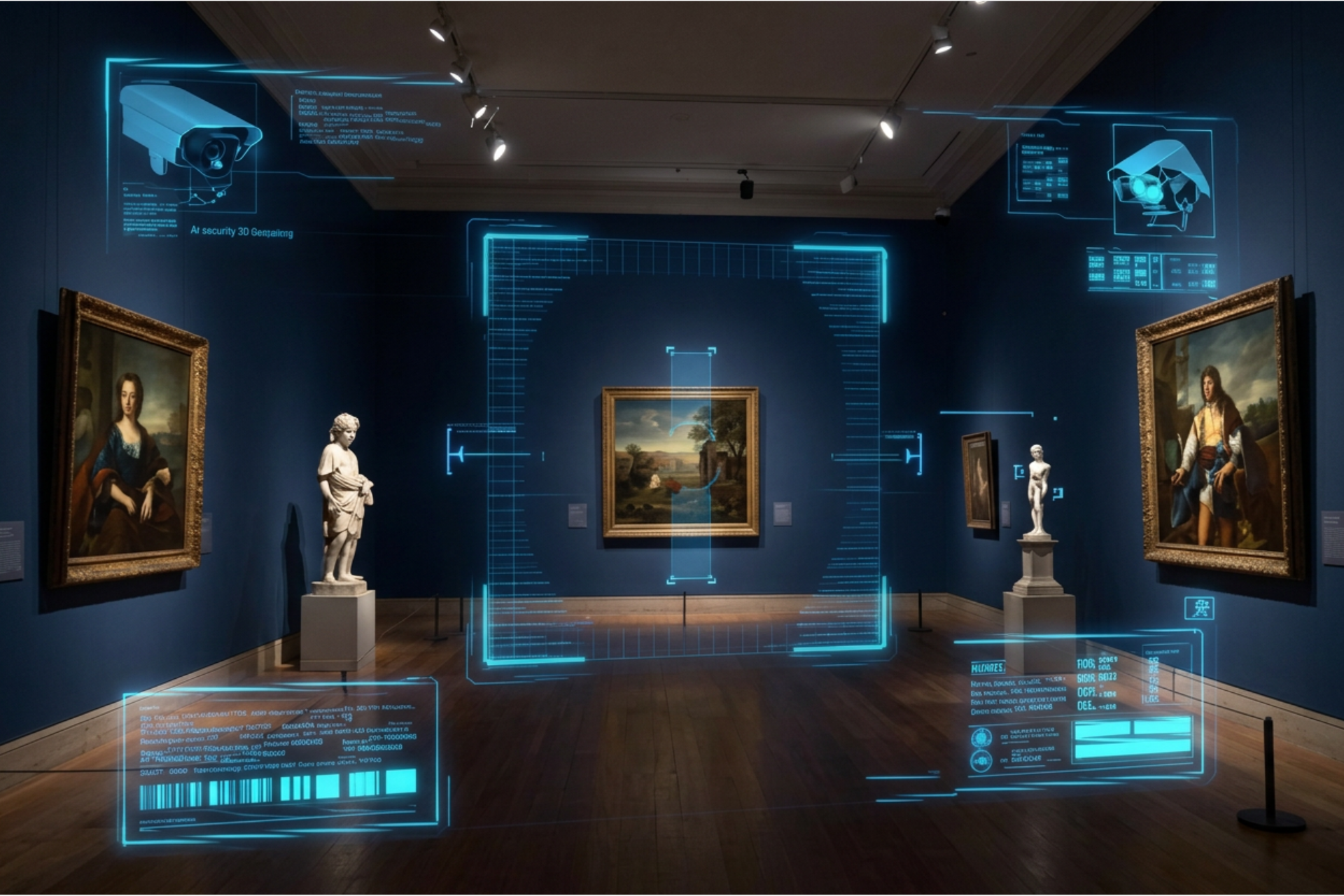
Artificial Intelligence is transforming the museum security landscape, promising faster detection, smarter analytics, and reduced operational costs. While these advancements are exciting, there’s a growing risk in treating AI as a plug-and-play solution that works equally well in every environment.
The most effective museum security solutions are those tailored to the specific environment they protect. Sentry Intelligence by Art Sentry uses AI machine learning to train and optimize the system based on each museum’s unique environmental factors, ensuring sensitivity and precision are tuned to real-world conditions.
Sentry Intelligence excels where generic Artificial Intelligence models fall short because it was built with feedback from museum teams and continually learns your environment.
1. Museums Have Unique Threat Patterns
Security threats in a museum are vastly different from those in an airport, retail store, or factory, and the physical environment makes that gap even wider. Generic AI models trained on broad datasets often lack the precision needed to recognize the subtle behaviors that can precede damage to priceless objects. Leaning too close to a museum display might signal a precursor to damage; in a transit station, the same movement is harmless. Compounding this, lighting conditions, floor layouts, crowd density, and seasonal changes all affect detection accuracy. An algorithm trained in a bright open lobby may struggle in dimly lit galleries or outdoor installations. Without both specialized training and tuning for these variables, AI will either overreact with false alarms or miss what matters most.
2. Features Museums Need
Generic artificial intelligence systems often come loaded with features that simply aren’t relevant to museum environments. Investing in capabilities that will never be used isn’t just wasteful—it increases hardware requirements, raises subscription costs, and adds unnecessary complexity for staff. Museums have unique security needs centered around protecting collections, monitoring visitor interactions, and maintaining a welcoming environment, not tracking retail inventory or analyzing unrelated business operations. By choosing purpose-built solutions designed specifically for cultural institutions, museums can focus resources on tools that deliver meaningful security outcomes while avoiding the expense and overhead of one-size-fits-all AI platforms.
3. Continuous Learning
Environmental conditions and visitor behavior are constantly changing within museums. A gallery that was secure yesterday may present new challenges tomorrow after a collection rotation, exhibit installation, special event, or facility modification. Moving artwork, introducing temporary exhibitions, adjusting traffic flow, or changing gallery layouts significantly alter a space’s security requirements. AI systems that rely on static configurations quickly become less effective as these conditions evolve. Continuous tuning, training, and feedback loops are essential to ensure the system adapts alongside the museum environment. By incorporating ongoing learning and refinement, museums can maintain accurate detection, reduce false alarms, and ensure their security technology remains aligned with both operational needs and emerging risks.
The Bottom line: AI is a powerful tool, but in museum security, a one-size-fits-all approach can create blind spots, inefficiencies, and compliance issues. Customization, context-awareness, and continuous refinement are not optional—they’re what make the difference between a system that looks good on paper and one that truly protects people and museum assets.