
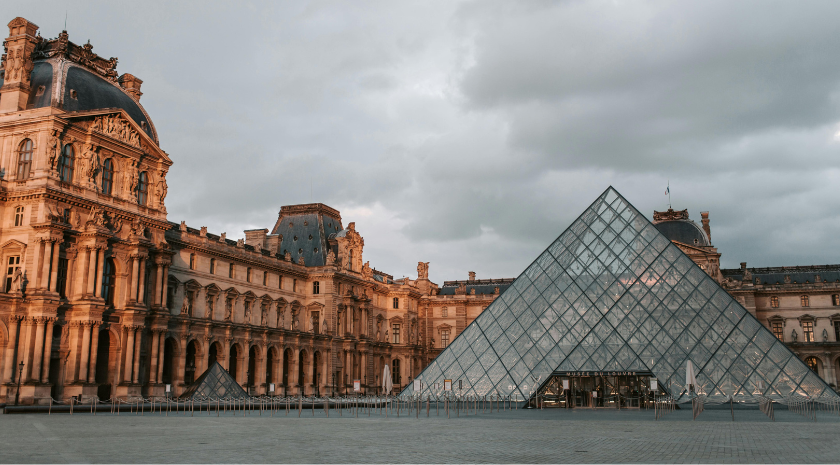
In December, The New York Times published a detailed examination of the brazen daylight theft at the Louvre, a crime that sent shockwaves through the global museum community. If a museum as iconic, well-funded, and heavily visited as the Louvre can be breached, it raises an uncomfortable but necessary question for every institution: Could this happen here?
What Went Wrong at the Louvre
The theft itself was fast and deceptively simple. Thieves posed as maintenance workers, drove a vehicle close to the building, accessed a second-floor window using a ladder, and breached the gallery using power tools. In just minutes, they escaped with historic jewelry valued at more than $100 million.
Investigators later identified several critical vulnerabilities:
- Perimeter activity went unnoticed
Exterior cameras captured the thieves’ arrival and ascent to the building, but no alert was generated and guards did not switch to the relevant live feed until after the thieves had fled. - Limited situational awareness in the control room
The control room lacked enough screens to view all camera feeds simultaneously, forcing operators to toggle between views and increasing the chance of missing critical activity. - Delayed recognition of a real threat
Alarms sounded only after the window and display cases were breached—by then, the opportunity for effective intervention had largely closed. - Reliance on human vigilance
Guards were focused on routine visitor activity, illustrating a common challenge in museums: frequent benign alarms and the difficulty of distinguishing real threats from background noise.
Key Lessons for Museums
Security experts interviewed by the Times emphasized that the Louvre incident was not about a lack of effort, but about time, prioritization, and layered protection.
Several lessons stand out:
- Perimeter awareness matters
The earlier a threat is detected—before a breach occurs—the more options a museum has to intervene. - Alarms must be meaningful and prioritized
When everything triggers an alert, nothing stands out. Critical events must rise clearly above routine activity. - Human monitoring alone is not enough
Even experienced staff can miss fast-moving threats without intelligent systems that surface unusual behavior.
Defense in depth is essential
Effective security relies on multiple layers working together to slow, deter, and escalate—not a single line of defense.
How Art Sentry Helps Address These Challenges
Art Sentry’s platform is built exclusively for museums and cultural institutions. Unlike generic security solutions adapted from retail or commercial environments, our systems reflect a deep understanding of how museums operate—open public access, priceless objects, historic architecture, and limited tolerance for visible security measures.
- Perimeter protection with intelligent triggers
Art Sentry detects and alerts at the perimeter—and alerts your team without requiring them to view cameras—helping museums gain critical minutes when they matter most. - Object-level protection with prioritized alarms
Our object protection analytics generate clear, actionable alerts when protected works are threatened, ensuring critical events are immediately recognized. - Introducing Sentry Intelligence™: AI that cuts through the noise
Building on our core analytics, Sentry Intelligence uses advanced AI to dramatically reduce false alarms. Sentry Intelligence helps security teams stay focused on what truly matters—real risks to people, buildings, and collections. - Reduced alarm fatigue, faster response
By minimizing unnecessary alerts and clearly prioritizing serious incidents, Art Sentry enables staff to respond with confidence and speed. - Technology that supports people, not replaces them
Art Sentry and Sentry Intelligence work together to enhance situational awareness, giving security teams the information they need, when they need it.
A Shared Reality
As one security expert quoted in the Times observed, no museum can be 100 percent secure. But the goal is not perfection—it is earlier detection, clearer signals, and faster response.
The Louvre heist reminds us that determined thieves exploit seconds and blind spots. Art Sentry, enhanced by Sentry Intelligence, helps museums close those gaps by transforming video and object protection into focused, actionable intelligence—so teams can concentrate on real threats before a loss occurs.